Inter-Activ: Presenting & Influencing

Call today on 01489 785448

Email: gmeikle@inter-activ.co.uk

Life lessons from the movies

The Kings Speech

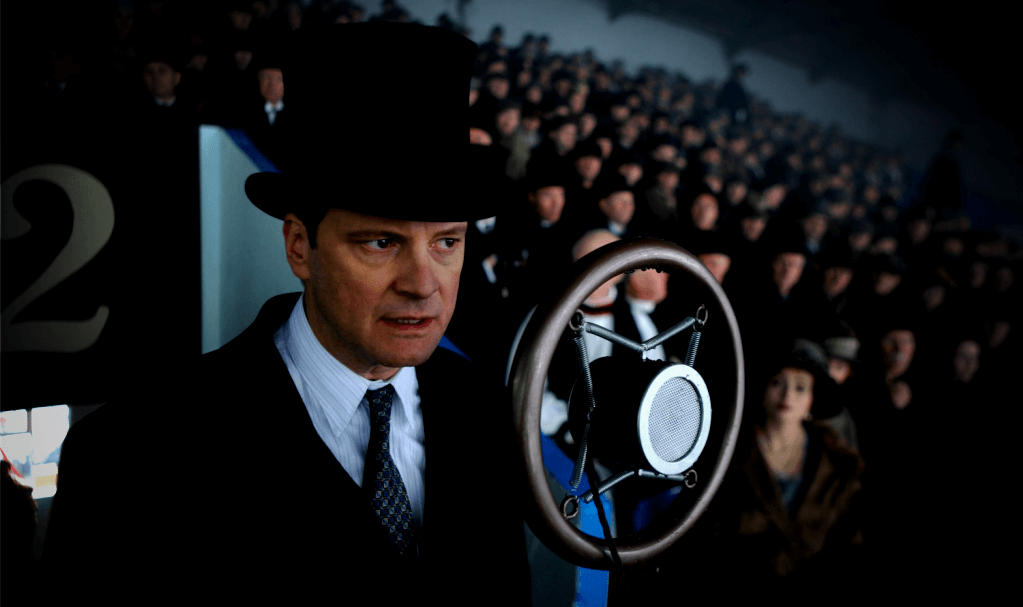
the kings speech colin firth Life lessons from the moviesEvery so often I watch a film that proves to be a fantastic source of learning and inspiration as well as entertainment.

Recently I saw the Kings speech and it really moved me.     Afterwards I started to wonder what it was that made it so powerful.

The acting was superb and believable.   The Prince’s frustration with his inability to speak fluently in public was palpable, and this made a wonderful contrast with the closing sequences where he clearly demonstrated to himself and the world that he had mastered his stammer.   The filming was tight and the period references felt accurate and relevant.

For me there were three powerful lessons that came out of this film:

  • That even the most intractable things can be changed with a combination of determination and the right support network.
  • That a quick fix is rarely the solution and that hard work and effort does pay huge dividends.
  • That ones ability to speak clearly and confidently in public can have a huge positive impact on yourself as well as your audience.

Interstingly I then did a search to see what other people had written about this superb film in relation to presenting and I came across this excellent slideshare presentation by Jessedee.  I thought you might like it too:

5 Presentation Lessons From The King’s Speech

If you haven’t seen the film I encourage you to go.

If you have seen it, I’d love to hear what you took from it, so post a comment below.

Gavin Meikle
The Presentation Doctor

share save 256 24 Life lessons from the movies

Public speaking – setting free our human voice

As a public speaking and presentation skills trainer I am passionate about helping my clients find their voice and develop the confidence and passion to share their knowledge, opinions, hopes, fears, thoughts and feelings with the world.

I came across this short video via youtube and its simple yet profound message just resonated with me.       So much so that I just had to share it with you.   I hope it will mean something to you to.

We have a voice and we should never be ashamed  to use it.

share save 256 24 Public speaking   setting free our human voice

Leadership, Music and Presentations – Watch this TED video

I love to watch and share presentation skills tips and especially great examples of passionate presenters.

Today I am indebted to Nancy Duarte of Duarte Design and author of the fantastic new book “Resonate”  for drawing my attention to this inspiring presentation.   Watch it and enjoy conductor Benjamin Zander’s passion and his command of the audience’s emotions.  WOW!

I guarantee you will learn some great presentation skills tips and be entertained and moved.

Now share your thoughts by posting a comment and starting a discussion.

What presentation skills tips did you get  from watching this video and how could YOU use that in the real world?

share save 256 24 Leadership, Music and Presentations   Watch this TED video

Be present to influence, communicate or present well

There is one thing that is absolutely essential to any effective communicator.   The ability to be fully present in the moment.   By present I mean to have one’s awareness fully engaged in each moment of the conversation or presentation rather than being “away” somewhere else thinking about the past or the future.

This seems like such an obvious thing to say but when you recall a past conversation, how much of the time was spent fully “present”.

Here is an example.  I was just typing this post when my wife Lyn called into the office and asked me to check an email she had written.   In that moment, my consciousness jumped out of the present and went to the future and I imagined myself doing her job rather than finishing this post.  Immediately I felt a little frustrated and annoyed.   Thankfully, because I was aware of what was happening, I was able to take a breath and bring my awareness back into my body in the moment.  Immediately my frustration disappeared and I was able to continue writing this post, having agreed to take a look at her email when I was finished.

Another example might be in the middle a presentation on a familiar subject when you find yourself thinking about what you have to do later that afternoon.   Your body is in the room but your mind is jumping ahead.

Being present has a number of benefits:

  • Allows us to make better decisions in the moment
  • Allows us to notice our emotional triggers and choose a better response
  • Allows us to easily and quickly dissolve nervous tension.  Most of our fears come only when we are thinking about the future.  Bring yourself back into the moment and this evaporate like the morning mist on the fields
  • Improves our listening skills – When we are fully present we can take in all relevant information before responding

Being present is an extremely simple concept, but it isn’t easy.

How do you increase your ability to be present?

  • Awareness:  If you are not consciously aware of a behaviour you cannot change it.
  • Acceptance: becoming aware of an unwanted behaviour can trigger a self criticism reflex.  Instead, praise yourself for noticing.
  • Adjust: Take a deep breath and bring your attention back to the here and now

Practice this simple skill and it will transform your communication and your life!

Gavin Meikle

The Presentation Doctor

share save 256 24 Be present to influence, communicate or present well

Match the pace to your content – Changing gear in a speech or presentation

istock 000007605317xsmall Match the pace to your content   Changing gear in a speech or presentationLast night I attended a meeting of a new public speaking club called Hamwic Speakers- Southampton.  Hamwic have only been going since March but are doing extremely well.   At last nights meeting I was entranced by a wonderful speech by a young man called Rich Watts, who talked about “A trip to grandma’s“.

On the face of it, not the most exciting of topics but Rich delivered a most entertaining and excellent speech in which, by describing in vivid detail, what it was like to visit his grandmothers, from the perspective of his five year old self, he evoked powerful memories and emotions in all of us.

I was particularly impressed with the way Rich matched his energy and pace of delivery to the story he was telling.  At the start his pace was slow and measured as he described the rather boring car journey where he was too small to see much out of the car window but clouds.  Then, when he arrived at his gran’s the pace picked up dramatically as he described zooming into her house (an Aladdin’s cave for a five year old boy!) with his arms outstretched behind him pretending to be a plane.

The pace stayed high as he described how he explored and played and then slowed a little as he started to describe the other family members present.   The pace slowed further as he brought us up to the present day and how things had changed.  How his granny wasn’t as energetic as she had been, how the food wasn’t as home cooked as it had been and so on.   This “gear change”change of pace brought a poignancy and a sense of reflection to this speech that worked beautifully and lead us up nicely to Rich’s take away message.

Rich finished with two key messages, about remembering the importance of Granny and perhaps even more important, remembering (& not losing) the sense of wonder and playfulness we had when we were younger.

I hope this short article has captured the importance of being able to change gear in any speech or presentation in order to be a more effectie story teller and influencer.

share save 256 24 Match the pace to your content   Changing gear in a speech or presentation

Impromptu speaking tips – part 2

In my last post I focused on the delivery side of an impromptu speech but what about the content?   How do I stop by brain going blank and running out of things to say?

Well here are two further technique to help you wow your audience ;

Use the PEP model

  • Position – Start by stating your position on the topicdo you agree or disagree?
  • Explain – Now expand on that by explaining why you hold this view.  How can you justify it?  What evidence support it? What alternatives have you considered and why have you dismissed them?
  • Position – End by restating your position confidently and authoritatively.  Some people are good at coming up with a powerful and clever closing quote but if inspiration escapes you try a simple “and so I believe ….”

Paint a picture: See, hear & feel.

Stories and case studies come to life when the speaker paints word pictures that hep us re-create the situation in our heads as they speak. To do this you need to use sensory specific language to bring your words to life.   A good tool to practice this skill is to describe  three things you could see, three things you could hear and three things you could feel (and also things you could taste and smell if appropriate).  This sort of detail really helps your audience see, hear and feel what you are talking about it.

For example, if your story is about meeting someone in the queue at the post office you could describe:

  • See – What they were wearing, the looks on the faces of the other people in the queue, the curling posters on the notice boards etc.
  • Hear – The muttering complaints from people in the queue next door, the laughter of a child playing at his mothers feet…
  • Feel – The mounting frustration as all the other lines seemed to move faster than yours, the firmness of their grip as they warmly shook your hand etc.

Have fun experimenting with sensory word pictures and see for yourself how they can make even the dullest subject come alive.

share save 256 24 Impromptu speaking tips   part 2

Is your thinking holding you back?

why Is your thinking holding you back?When I was a sales manager I saw a number of potentially great communicators stall despite fantastic subject matter knowledge and great technique.   It was no surprise to me that sending them on a skills refresher course didn’t solve the problem as I instinctively knew that the problem lay at the level of identity and believe rather than skill or capability.

On numerous occasions I fought with my colleagues in the training department because they said that you couldn’t do anything about those sort of problems and so they would resort to their comfort zone.

Over the years I have studied lots of different methodologies and approaches seeking a simple way to solve this problem both for myself and my clients and I beleive I have finally found the solution.

It’s a process for challenging and transforming the thoughts that are behind our blockages and it comes courtesy of the work of American teacher and author Byron Katie.

Step 1 – Identify and write down the thoughts that are stopping you from getting the results you want:
e.g

  • “My boss doesn’t think I’m confident enough to be  promoted”
  • “They think I’m too young”
  • “He won’t like me”
  • “I’ll make a mess of it”

Step 2 – Choose one of the statements you wrote down and  then ask yourself “Is that thought true? – Yes or No?”

Step 3 – If the answer to step 2 is “Yes” then ask yourself “Is it absolutely true?”

  • Close your eyes, go inside and wait for the honest answer to come from within you

Step 3 – “How do I react when I think that stressful thought?”

  • What do you do?
  • What do you think? What images come into your mind?
  • How do you feel when you think that thought

Step 4 – Who would you be without that stressful thought?

  • Close your eyes and see yourself doing what you want to be able to do, without that stressful thought

Repeat this process for every stressfull thought you wrote down and notice how you feel now.
NB:  I find that this process is a bit like peeling an onion, there are layers beneath layers but the wonderful thing is that the more you do it the easier it gets until you do it automatically.

share save 256 24 Is your thinking holding you back?

Presentation creativity – How to generate inspiration

iStock 000007181711XSmall Presentation creativity   How to generate inspiration Do you ever have the same problem I have?   I bet you do.   There you are sitting in front of your computer  with  blank powerpoint  or word template in front of you , a deadline looming and your mind is blank!

Unlocking our creativity and escaping the bind of writers block can be easier than you think – well that has been my experience anyway.    In this post I’d like to share a  technique I use to get the creative juices flowing again.

Change your location

It never ceases to amaze me how important my physical environment can be so whenever I get stuck I change my location and see what happens.   In the summer I go sit in the park.  In the winter I prefer a warm coffee shop, for obvious reasons!   Both seem to work well.    Nature is very stimulating and just noticing the trees, birds, clouds and people passing by is guaranteed to stimulate those neurones.

Likewise I find close proximity to other people works well too.   This surprised me initially because I thought it would have the opposite effect.    I suppose I got the idea from reading about how JK Rowling wrote the Harry Potter Novels in her local coffee shop.   Somehow the clatter and the chatter kick-start my brain and I am amazed at how much more creative I can be.

So I’m curious as to where the best place for you would be.   If you haven’t tried changing your space then I highly recommend you do.   And remember to share your own experiences with me and the other readers of this blog by posting a comment below.

share save 256 24 Presentation creativity   How to generate inspiration

Watch this presentation and put your “big ears” on

This video clip serves four purposes for students of presentation and public speaking skills:

  1. It demonstrates the value of a clearly structured message
  2. It shows how things like eye contact, body language and vocal variety engage the audience
  3. It shows how simple visual aids with well chosen images add to the presentation
  4. It contains a valuable message that we all should learn and take heed of.

Enjoy

share save 256 24 Watch this presentation and put your big ears on

How do we believe in ourselves?

sunrise1 150x150 How do we believe in ourselves?This post was promopted by a comment made by my wife Lyn after an early morning walk today.

It was a beautiful morning here in the South of Hampshire. The sky was just starting to colour up as the sun rose and the air was crisp and fresh. After a few minutes of silent contemplation we started to chat about anything and everything. In particular we gravitated towards talking about what it is that allows people to have the confidence to do amazing things such as present with confidence and conviction.

Self belief kept coming up in our conversation and then Lyn asked “How can we have more belief?”

My first answer surprised me when I said, “Maybe it’s not so much about doing something to havemore belief, but rather its about stopping doing things that erode our self beleif.”

As an example, a colleague I met at a networking event recently said, “the problem with me is that I don’t have sparkle” and so my talks are dull. This sounded to me like a limiting belief and when I asked them how they knew they didn’t have “sparkle” they replied “Somebody told me once, after a talk.”

So, based on the opinion of one person commenting on once example, they had generalised that comment to encompass every possible speaking situation across their whole life. How crazy is that?

Thankfully a few minutes after my response to their answer they suddenly said, “Well actually, I’ve just remembered that the speech I gave when I got married was really good and I got lots of praise for it afterwards.” When I asked them ” Did you sparkle on that occasion?” They said “Yes!” and I could see from the light in their eyes and the change in their expression that they had realised something very valuable.

So next time you put yourself down about your speaking abilities (or anything else for that matter!) remember my friend and his sparkle story. Do a reality check and see if you are really as bad as you think you are? Have you ever had good feedback? Have you ever been pleased with your own performance?

If you want to nurture your confidence one key step is to stop dwelling on your failures and putting yourself down.

share save 256 24 How do we believe in ourselves?